Cumberland Clear says Roberta fight continues, Turns Attention to Data Centers
PROTECTED CONTENT
If you’re a current subscriber, log in below. If you would like to subscribe, please click the subscribe tab above.
Username and Password Help
Please enter your email and we will send you a password reset link.
Cumberland Clear says Roberta fight
continues, Turns Attention to Data Centers
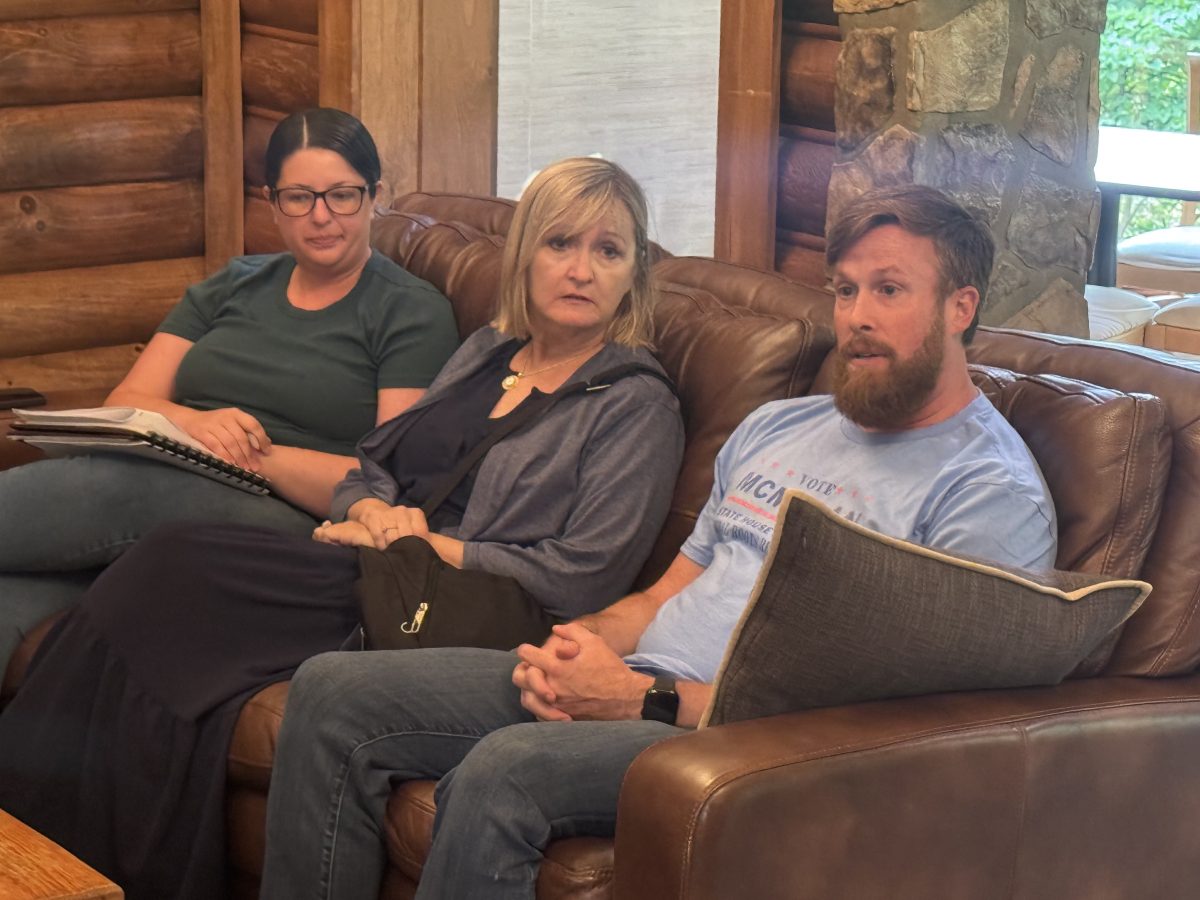
Photos by Shane Gilreath
After weeks of anticipation, Cumberland Clear held what the organization deemed a planning meeting last Wednesday. Organization Treasurer Alison Cowen, Lisa Cotton, and State Representative Candidate Seth McMillan all spoke on concerns regarding the proposed landfill, data centers, and legislation that otherwise impacts Scott County.
By Shane Gilreath
SCN Contributing Editor
[email protected]
When Cumberland Clear met last Wednesday, President Jennifer Shockley delivered a message that many in the organization had heard before – the fight over the Roberta II landfill and Winfield-based transfer station is far from over. Addressing more than a dozen attendees gathered at Timber Rock Lodge, Shockley pledged that Cumberland Clear would remain on the front lines of opposition to the controversial landfill project that has remained a hotbed issue throughout the area for more than a year. Formed to ensure local citizens had a voice in decisions affecting their communities, the organization has since become one of the most visible opponents to Roberta, frequently hosting public meetings and taking countless trips to Nashville to advocate for Scott County’s role in deciding for itself.
Shockley and Cumberland Clear Director Ralph Trieschmann were even among those who attended a Tennessee Solid Waste Task Force meeting in Nashville just last week.
“I’m not sure it affects the policies,” Shockley told supporters of the Task Force meeting, “but it is informative and we see what the state is planning.”
Shockley also addressed Roberta II’s recent appeal of the Tennessee Department of Environment and Conservation’s (TDEC) denial of its Aquatic Resource Alteration Permit (ARAP), an issue previously reported on by SCN.
“We can contest that appeal as Cumberland Clear,” Shockley said. “And we are having those discussions.”
While the strategy of Cumberland Clear was not publicly discussed, the Roberta appeal itself argues that TDEC improperly interpreted regulations and contends other potential sites which may cause less of an environmental impact are not feasible because of costs, logistics, delays, and project objectives. Roberta also disputes the state’s findings regarding drainage systems, stream impacts, acid rock drainage concerns, and application fees, maintaining those issues could be addressed through mitigation rather than an outright permit denial, which was issued to them in April.
Should TDEC uphold its original decision, the project could be forced back through local approval processes. Because the state has already determined Roberta’s recertification request constitutes a major modification rather than a minor change, local governments could once again gain significant authority under Tennessee’s Jackson Law – itself a law that could be on the chopping block in Nashville. Local governments have repeatedly indicated they would not support the project if it were brought before them.
Discussion also centered on concerns over existing and future litigation with a common question being whether the Scott-McCreary Environmental Coalition (SMEC) would pursue litigation of their own. Shockley said Oneida Mayor Lori Phillips-Jones and Winfield Mayor Jerry Dodson had asked the Scott County Solid Waste Board (SCSWB) to enter such a suit, but the proposal died for lack of a motion at the most recent SCSWB meeting.
Cumberland Clear also turned its attention to the growing issue of large-scale data centers. Alison Cowen warned that Cumberland Clear’s concerns extend beyond the two existing centers in Scott County.
“We’re not talking small centers, but like the one in Utah that’s hyperscale,” Cowen said, referring to the massive Stratos project, a proposed AI-focused data center campus spanning tens of thousands of acres and designed to consume gigawatts of power.
Cowen noted Cumberland Clear has joined other Tennessee communities in studying the County Powers Act as a potential tool for local oversight. Similar discussions in Anderson County have focused on temporary restrictions and additional review requirements for future data center development.
State Representative candidate and Scott County native Seth McMillan, who is seeking to oust Rep. Kelly Keisling, said the County Powers Act was originally designed to protect unincorporated areas while working alongside existing municipal zoning regulations.
“It would work with the municipalities,” McMillan said.
After a year dominated by landfill battles, Cumberland Clear supporters appeared united in their desire for local control over future development and to maintain a local voice in these matters.
“We have to decide now,” said Shockley, a candidate for Scott County Mayor. “Are we going to decide for ourselves in Scott County, or let someone else come in and tell us what to have?”