
New Monument pays tribute to Scott County’s unique past
PROTECTED CONTENT
If you’re a current subscriber, log in below. If you would like to subscribe, please click the subscribe tab above.
Username and Password Help
Please enter your email and we will send you a password reset link.
New Monument pays tribute to Scott County’s unique past
By Shane Gilreath
SCN Contributing Editor
[email protected]
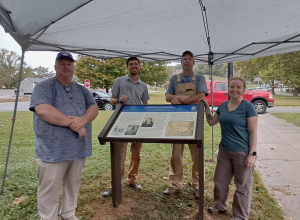 A unique chapter of Scott County’s history is now on display at the Huntsville Courthouse Mall, where a Civil War Trails Storyboard has been officially installed. This piece of Scott County’s story – uniquely found on signage for all to learn – will make Huntsville the newest stop on the nationally recognized Civil War Trails network. The location was chosen with intention, according to Huntsville Mayor Dennis Jeffers. “The Chamber approached us looking for a location with a lot of access,” said Jeffers, who has supported the project from its early stages. The chosen location, says Jeffers, is highly visible, fully accessible, and open around the clock, allowing residents and visitors to engage with local history at any time.
As Scott County continues to strive towards becoming a tourism hot spot, the addition of the new signage places the county on a map that connects more than 1,500 Civil War sites across six states. The Civil War Trails program is designed to help people “follow the story,” the program says, bringing history to life in the very places where it originally unfolded. For Scott County, that story is particularly unique. During the Civil War, the county famously declared itself the “Free and Independent State of Scott,” separating from Tennessee – a deeply divided state in its loyalty between a Federal and Confederate faction – in protest of the state’s secession. The Huntsville storyboard highlights those divided loyalties and the remarkable stand taken by the people of this region.
The idea for an independent Scott was proposed, if even indirectly, by the future president, then-Senator Andrew Johnson, who gave an anti-secession speech in Scott County on June 4, 1861, a month after the State General Assembly passed the Ordinance of Secession. Johnson urged opposition to the secession movement. The county assembly is said to have later based its resolution to secede from Tennessee on his proposal.
In a topsy-turvy state of affairs, Scott County citizens voted overwhelmingly (541–19) against a referendum to secede from the Union when it was balloted four days after Johnson’s address. The state, however, passed it. Later that year the county court voted to approve the Scott County General Assembly’s unanimous resolution approving the county’s own secession from Tennessee, establishing a community whose sympathies remained deeply loyal to the Union throughout the war.
Like so many people who learn Scott County’s story, Jeffers also noted the depth and richness of the tale, as demonstrated on the installation. “There’s a lot of reading,” he told SCN, acknowledging that the marker offers more than a quick glance for passersby. Rather, it invites visitors to linger, learn, and reflect on the story that took place on the ground beneath their feet.
Ultimately, with growing tourism numbers across the Big South Fork area, Jeffers, who was featured in a national magazine earlier in the year for the town’s successful growth, believes the storyboard will become a draw for those beyond the county line. “It will eventually bring in tourists and visitors,” he confidently told SCN.“There’s a lot of history buffs out there and our heritage and history is pretty deep here.”
For those seeking to visit, the public is invited to stop by and explore a meaningful addition to the community’s story. The monument is open 24 hours a day.
