
History
PROTECTED CONTENT
If you’re a current subscriber, log in below. If you would like to subscribe, please click the subscribe tab above.
Username and Password Help
Please enter your email and we will send you a password reset link.
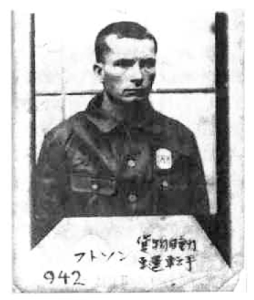
Sgt. Joe Henry Hutson Bataan Death March Survivor:
MILITARY: The following is reprinted from a page one feature story in the Independent Herald, published on June 14, 1984. – By PAUL ROY
After the April 9, 1942, U.S. surrender of the Bataan Peninsula on the main Philippine island of Luzon to the Japanese during World War II (1939-45), the approximately 75,000 Filipino and American troops on Bataan were forced to make an arduous 65-mile march to prison camps. The day after Japan bombed the U.S. naval base at Pearl Harbor, on December 7, 1941, the Japanese invasion of the Philippines began. Within a month, the Japanese had captured Manila, the capital of the Philippines, and the American and Filipino defenders of Luzon (the island on which Manila is located) were forced to retreat to the Bataan Peninsula. For the next three months, the combined U.S.-Filipino army held out despite a lack of naval and air support. Finally, on April 9, with his forces crippled by starvation and disease, U.S. General Edward King Jr. (1884-1958), surrendered his approximately 75,000 troops at Bataan.
There are two kinds of war veterans. Those who don’t care to talk about their years of service, and those who won’t. For almost 40 years, Norma’s Joe Hutson has been one of those who didn’t have much to say about his experiences in World War II. It was something he wanted to forget, not reminisce about. But last Thursday morning [June 7, 1984] Joe and I talked about his Army days, or rather he talked and I listened. I learned that he was in the Army and stationed in The Philippines when the war broke out. And I learned that he spent most of this war as a prisoner of war of the Japanese – 1,254 days, from the time the Japanese took the Philippine Islands until the Americans dropped the atomic bomb on Hiroshima. And the story Joe Hutson has to tell is one of survival. Just survival. Not the glory and romance so often associated with the Hollywood review of the war, not the “Hogan’s Heroes” version of life in a prison camp and certainly not a tale of heroic deeds. Joe Hutson was a survivor of the Bataan Death March, where literally hundreds and hundreds of soldiers died on a forced march en route to prisoner of war camps in The Philippines. He remembers April 8, 1942, vividly. It was four months after the Japanese had invaded the island. On that day, they took it. The U.S. Army’s supply lines had been cut off. “And General [Edward] King got in his Jeep to go surrender to the Japanese,” said Hutson. Wall City, Manila, became the property of the enemy. And so did the soldiers who had survived. He thought the war was over. For all Joe Hutson and his fellow soldiers knew, the U.S. was beaten. For the next 41 months, Hutson and other survivors would not know that the war was still raging throughout the rest of the world, would not know that slowly but surely the U.S. and its allies were actually winning the war in battle after bloody battle. All Joe Hutson knew was that his outfit, Company B of the 32st U.S. Army Infantry, had surrendered. The death march began. “I can’t tell you how many days we marched,” Hutson said, “and I can’t tell you how many miles it was. And that stuff you read, where those fellows put down what happened on this day and what happened on that day, well, let me tell you, the truths not in it.” Nobody, said Hutson, was able to write anything. There weren’t any pencils or paper and besides, you weren’t thinking about recording something for history’s sake, but merely trying to stay alive. Men were dying by the hundreds. Every day. And the march went on and on. There was water everywhere around them. They marched through it, walked around it. “But if you stepped out of line to get a drink, they shot you,” Hutson said. You had to literally risk your life to quench your thirst. There was food, such as it was, once a day. Mostly it was a handful of rice, or a rice ball, as Hutson remembers it. It wasn’t long before Hutson, like all those around him, was down to skin and bones. He estimated he got down to around 80 pounds while a prisoner of the Japanese. Joe Hutson came face to face with death during this forced march. But it was just the first time. He was to face the prospects of dying many times during the months to come: Death from starvation, death from dehydration, death from dysentery, death from malaria. But Joe Hutson, and in one manner of speaking, just a handful of other U.S. and British soldiers, managed to survive. Why? “I told myself I was-going home,” Hutson said, “And I knew I would.”
The memory of Sgt. Joe Henry Huston will continue in next weeks edition, September 5, 2024.