The American Experience
PROTECTED CONTENT
If you’re a current subscriber, log in below. If you would like to subscribe, please click the subscribe tab above.
Username and Password Help
Please enter your email and we will send you a password reset link.
The American Experience
A Winfield Woman’s Journey to Rededicate 250
By Shane Gilreath
SCN Contributing Editor
[email protected]
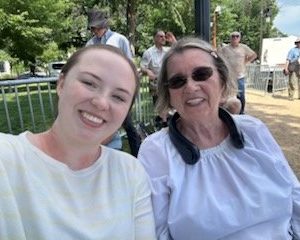
Photo submitted
Ruth Massengale Thompson and her grandaughter, Rachel Chitwood, took part in the Rededicate 250 ceremony in Washington, DC
History has a habit of remembering its loudest moments while quietly forgetting the ones that made them possible. Every year, Americans remember July 4, 1776. They remember the bold wordsmith that was Thomas Jefferson and the Declaration of Independence. They remember Lexington and Concord, Valley Forge, Yorktown, and the birth of a nation that would change the world – but history’s greatest moments are often preceded by much quieter ones.
Long before Jefferson’s ink dried, while the outcome of the Revolution remained uncertain, the Continental Congress did something long forgotten. On May 17, 1776 – just weeks before independence was declared from Great Britain – it proclaimed a national day of prayer, calling upon the people to seek the favor of God. In that moment, the delegates understood something that every generation has since wrestled with – that liberty, while won 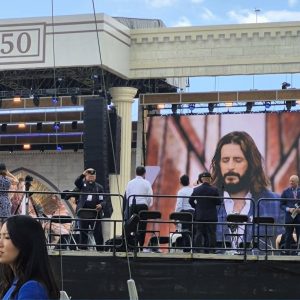 by the courageous, is sustained by those with character; that freedom, though defended by the valiant, depends heavily on the people who inherit it. Perhaps that’s why, as George Washington prepared to leave office, he chose to remind Americans that “of all the dispositions and habits which lead to political prosperity, religion and morality are indispensable supports.” His wasn’t merely a farewell. It was a warning that republics don’t survive on declarations alone.
Jefferson, whose eloquent pen gave voice to the Revolution, expressed the same conviction – in a voice that only Jefferson could inhabit, boldly asserting that mankind is “endowed by their Creator with certain unalienable rights.” Before there was an America, Jefferson argued, there existed an authority even greater than America itself.
 Those ideas have continued to echo through every chapter of the American story.
Abraham Lincoln, standing amid the bloodshed of war, spoke not only of preserving the union, but of one nation under God. More than half a century later, Herbert Hoover observed in his famed “American Individualism” that America’s greatest strength rested not in government, but in the initiative of ordinary citizens. “Our individualism,” Hoover wrote, “has become the precious possession of every citizen.” Freedom, he believed, endured only when individuals accepted responsibility inclined to it.
Ronald Reagan – perhaps the most beloved of modern American leaders – would later caution that “freedom is never more than one generation away from extinction.”
Different centuries. Different presidents. Different circumstances. Different lives. And, yet, somehow all have been participants in the American story.
Now, as the nation stands on the cusp of it ssemiquincentennial – the 250th anniversary of the Declaration of Independence – communities from sea to sea will gather to remember not only the events of 1776, but the very philosophies that have given such events meaning. For one local family, that took place with Rededicate 250, an event taking place on May 17, 2026 – the very anniversary of the Continental Congress’s call to prayer.
The event, organized as a national day of thanksgiving, invited Americans from every corner of the country – both urban and rural, every race and gender – to gather beneath the great shadow of the nation’s Capitol, giving thanks for God’s providence on the nation. Among those answering that invitation was Winfield’s Ruth Massengale Thompson.
Thompson had lived near Washington years earlier while residing in Virginia, but there was something different here. This time, she wasn’t merely returning to familiar sights and scenes, but something stronger – something within her believed she was meant to be there.
“When I first heard about Rededicate 250,” Thompson recalled during an interview with SCN, “I knew that I wanted to be a part of something like that, but I seriously never dreamed that I actually could.”
Like so many Americans, Thompson, who had long been active in her local community, had watched the country endure years of division, uncertainty, and political hatred – causing the nation to feel torn apart from within. The invitation to gather in DC – not in protest, but in prayer – resonated deeply.
“I knew I wanted to go,” Thompson told SCN. For her, the desire was immediate, a natural pull to something bigger than herself, even if the possibility seemed unlikely. Washington, DC, and its high power politics can feel a world away from small town Tennessee. There was many considerations. Airfare, lodging, transportation, navigating a busy city, and fighting what promised to be massive crowds seemed to place the trip beyond her reach.
What she had done, she told SCN, was do exactly as the delegates at the Continental Congress had done 250 years before. “I began to pray that if it was God’s will for me to go,” she said, “that He would make a way for it to happen.”
What followed would become, for both Ruth and her granddaughter Rachel Chitwood, a journey neither will soon forget. Like clockwork, things began to happen. Doors, once closed, began to open. Over the years, Thompson discovered, she had accumulated enough Southwest Airlines points to cover the travel expense. Then came another unexpected blessing. Chitwood was scheduled to graduate from Belmont University in Nashville just three days before the Rededicate 250 gathering. The stars seemed to align.
“When I asked Rachel if she wanted to go with me,” Thompson recalled, “she was excited.”
What had first appeared to be an impossibility gradually began becoming a reality, and on May 12, 2026, the two set out together – first celebrating one milestone before beginning another. Rachel walked across the commencement stage at Belmont, closing one chapter, and days later, she was walking the streets of one of the most famous cities in the world. The unlikely providence of the journey became part of the story. One generation, looking toward the future. The other, reflecting on the past – a family history and days of togetherness with a beloved grandchild.
Though she had worried about getting around, “Rachel was the perfect navigator,” Thompson remembered, her pride obvious. “She got us everywhere we needed to be.”
Washington, most will tell you, is a city best adventured on foot. It’s storied monuments aren’t merely destinations but history in stone – every carving a piece of the nation’s story, progressively leading to another chapter: the quiet reflections of the Lincoln Memorial, the solemn rows at Arlington, the crypt beneath the Capitol dome. For Thompson, those familiar landmarks seemed to take on a new meaning, places beyond a deep reverence but of deep remembrance, as well; places that invites visitors to admire history but equally consider their own place in it.
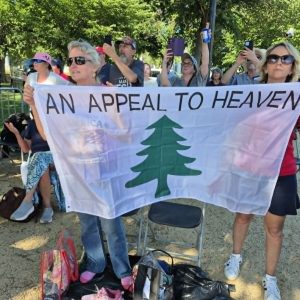
And that’s exactly what happened on the morning of May 17th. Long before the music began, streams of people poured into the National Mall. Some carried well-worn Bibles tucked beneath their arms. Families, multiple generations, gathered. Veterans, clergymen, elected officials all became one.
“It was a massive crowd,” Thompson recalled, “but everyone was there for the same reason – to praise and glorify God.”
As the hours unfolded, messages arrived from public officials, including President Donald Trump. Among the day’s most anticipated guests was actor Jonathan Roumie, whose portrayal of Jesus in “The Chosen” has itself introduced the Gospel to millions around the world. For Thompson, the significance of Roumie’s appearance led to one of the most providential conversations of the day.
After finding a place to sit, the always social Thompson began a conversation with a woman seated near her. When the woman asked if there was anyone Thompson was hoping to see, her answer came quick: Jonathan Roumie, the actor who has defied Hollywood with public expression of his Christian faith.
At once, the young woman’s face changed. At the mention of the devout Catholic actor, tears began rolling down her face, and she began to tell Thompson her own story. The woman had appeared as an extra in “The Chosen” – the series that explores the life and ministry of Jesus Christ – and was a member of the crowd during the lead up to the crucifixion. The experience, which included being compelled to yell “Crucify him,” had deeply affected her, Thompson remembered.
“I didn’t sleep for many weeks after that,” the woman recalled. “It was so real to me. I was devastated.”
The woman’s experience was deeply moving. Here, Thompson said, amid thousands of people, she had found herself listening to another story altogether – one reaching back not 250 years, but two thousand. Life, she reflected later, has a way of placing unexpected companions beside us.
As the May sun grew warmer, temperatures in the capital climbed into the upper eighties. The expanses of the National Mall offered little retreat. Out of no where, Rachel quietly slipped away. A few moments later, she returned bearing a smile.
“I’ve found you a place in the shade, Nanna,” she announced. “And there’s a chair waiting for you.”
Of all the memories Thompson carried home from Washington – the monuments, the officials, Roumie and “The Chosen” – that simple act of love remains among the dearest.
“There were thousands of people there,” she told SCN, still amazed by the story. “And Rachel found the one person who was willing to let me sit in the shade for the entire day.”
President Hoover once wrote that America’s strength rested in “the voluntary cooperation of its people,” that freedom flourished not only through institutions, but through the countless acts of kindness of ordinary citizens who expected no reward or recognition. Standing beneath the trees on the Mall, seeing her granddaughter’s quiet concern for her and the strangers willing to make room for one another, Thompson found herself witnessing Hoover’s words as a lived experience and it warmed her heart.
Thompson found that as the crowds began to disperse she was carrying something far more meaningful than a souvenir. “I really felt God’s presence,” she told SCN. It was not merely the music or the speakers that left that impression. It was people. The families that lingered together. The strangers who were helping each other. The volunteers. The conversations that began between people who, under everyday circumstances, might never have crossed paths. The providential pieces that had placed her on this path continued to come together. For the grandmother who had come hoping only to attend a gathering of faith, gratitude abounded – a memory shared with her granddaughter forever.
“Spending time with Rachel was such a joy,” she said. “We made memories that neither one of us will ever forget.” And, maybe, in the end, that’s what commemorations are meant to accomplish – togetherness, to invite each generation to answer the question that has followed America from its earliest days – what, if anything, should be carried forward.
When Thomas Jefferson wrote that mankind is “endowed by their Creator with certain unalienable Rights,” he was making a claim far greater than independence. He asserted that liberty itself possesses a dignity beyond governments – republic, monarchy, or otherwise – that it is something to be protected rather than merely granted.
Washington,too, understood that liberty alone wasn’t enough to sustain the republic. In that Farewell Address, he warned that religion and morality were indispensable supports, believing that freedom depends on the character of the people.
In fairness, in the immediacy beneath the trees on the National Mall, Ruth Thompson didn’t find herself thinking about political philosophy – not Jefferson, nor Washington – but character in action. A granddaughter. Strangers. And as she watched the thousands gathered, she realized that they had not been compelled to come, but came in prayerful thanksgiving, grateful for a nation and its story.
Perhaps that is why May 17th was chosen for Rededicate 250 – the largely forgotten day when the Continental Congress called upon a young nation to turn to prayer before an uncertain future. Two hundred and fifty years later, another generation – and a family from Scott County – gathered on that same date, not to ask whether America would survive, but thankful that it had.
The many challenges that America faces today are not those of 1776. The questions confronting a new generation are different from those faced by Washington, Jefferson, Lincoln, Reagan, or Hoover, but every generation must determine whether the inheritance it has been given is worthy of its stewardship, its care, it defense. For Thompson, the faith and responsibility she feels for America inspired a journey she once believed impossible. For her granddaughter, it became a memory shared with a devoted grandmother at the dawn of America’s next great story – a chapter yet to be written. A chapter of precariousness like so many before it.
When the Continental Congress called for prayer in 1776, no one could have imagined the nation what would emerge from uncertainty and warfare, but they would have understood one thing: though it may be secured by declarations and documents and defended by valiant armies, freedom, as Jefferson reminded us, comes from God and it is sustained in the hearts of a grateful people.