Park begins planting trees for Arboretum
PROTECTED CONTENT
If you’re a current subscriber, log in below. If you would like to subscribe, please click the subscribe tab above.
Username and Password Help
Please enter your email and we will send you a password reset link.
Park begins planting trees for Arboretum
Photos by Virginia Bruce
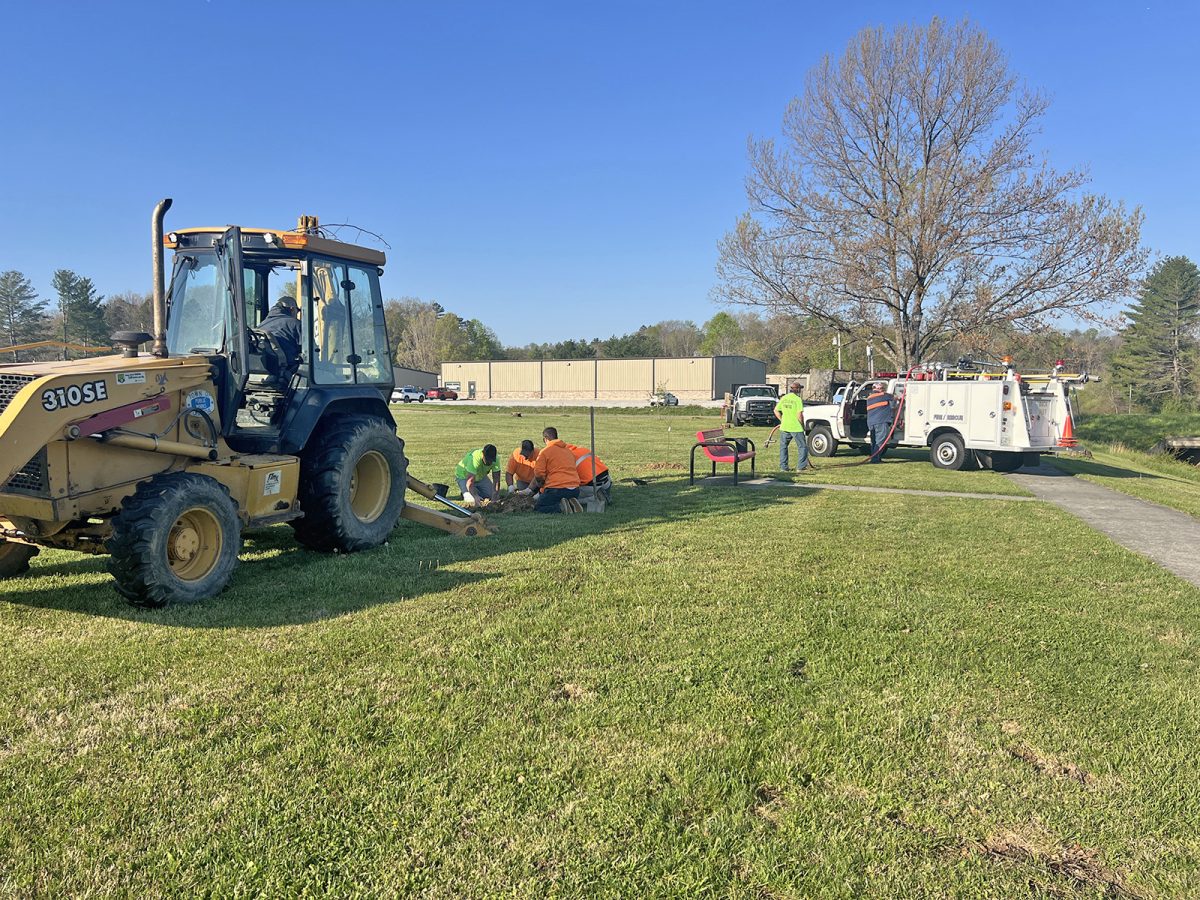
The City of Oneida began replacing the Bradford pear trees that were removed late last year. The new trees will become a part of the city’s arboretum plans.
By Shane Gilreath
SCN Contributing Editor
[email protected]
Work to transform Oneida City Park into a community arboretum began in earnest last week, marking the first steps in the town’s effort to promote biodiversity and environmental education inside Scott County, which leaders hope will be a boost to the growing tourism industry.
The latest effort follows the removal of Bradford pear trees earlier this year, with crews now replacing them with a diverse mix of regionally appropriate species. Oneida’s Community Development Director Virginia Bruce said those trees include red maple, Brandywine maple, October Glory maple, basswood, Carolina silverbells, sourwood, bald cypress, Autumn Brilliance serviceberry, Kentucky coffee trees and ironwood.
The planting of the trees remains on par with dates the town told SCN in February, just in time for spring use of the park space, with the project hoping to transform the area without interrupting daily visitors and usage.
As previously reported by SCN, the park has also applied for formal arboretum recognition, a distinction that would highlight its growing diversity and educational mission. Bruce said all species of trees will soon be tagged with labels listing both common and scientific names, helping visitors identify species and learn more about the landscape. These markers will serve as simple but effective tools for cataloging plants while encouraging curiosity among guests of all ages.
While the park’s appearance and daily use will remain largely unchanged, its new status will transform it into a living nature museum, ideal for nature walks, school field trips and hands-on learning in dendrology (the study of trees) if all goes as planned. Local leadersshop with an eye for tourism advancement believe the arboretum could also draw new visitors to Scott County, blending recreation with conservation.
The trees for the project were provided by a grant from the Tennessee Agricultural Enhancement Program (TAEP) that helps fund community tree planting through the Tennessee State Legislature. The community tree planting component of TAEP is administered by the Department of Agriculture Division of Forestry.