
Scott County the Beginning October 10th Issue
PROTECTED CONTENT
If you’re a current subscriber, log in below. If you would like to subscribe, please click the subscribe tab above.
Username and Password Help
Please enter your email and we will send you a password reset link.
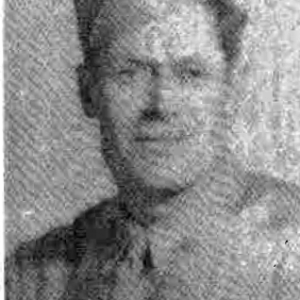
My great grandfather, Walter Thomas Reid, was drafted into the military on March 20, 1942, which was 3 years after World War 2 began. He was almost 30 years old when he was drafted. Before he was drafted, he worked as a miner in a coal mine for Cambra Coal Company in Briceville, Tennessee. He mainly worked as a loader, drilled holes, inserted and set off charges and did retimbering.
During his time in the military, he was decorated with an EAMET(Europe-Africa-Middle East Theater Campaign Medal) with two bronze battle stars, a Good conductmedal, and a Purple Heart with an Oak Leaf.
On one of his missions in Germany, a hand grenade went off on the bridge that he was standing on. He was thrown approximately 30-40 feet off of the bridge, and into the water. The combination of the hand grenade explosion and the impact on the water made him lose eighty percent of his hearing in one of his ears. He also received a broken arm in France.
While he was serving in the military, he taught mechanized cavalry basic training for four months, he was a truck driver for six months, and a hospital orderly for three months; however, his main military assignment was a rifleman on a tank destroyer. He was honorably discharged from the military on October 14, 1945.
None of his family really knows a lot about what happened to him in the war because he did not like to talk about it, but we do know that he had nightmares about the war for the rest of his life.
Cpl. Cletus Fryer; American
Soldier Witnessed the flag raising at Mt. Suribachi (lwo Jima)
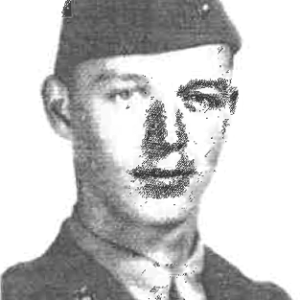 Cpl. Cletus Fryer was born in 1924 in Scott County, Tennessee. He married Opal Fryer about the time that he enlisted into the US Marines. He and Opal had three sons, they all own their own businesses and are doing really well for themselves.
Cletus enlisted to feed and protect his family, and his country. Cletus’ rank was Corporal and his biggest engagement during the war was with the 28th Regiment, 5th Marine Division during the Battle of lwo Jima which lasted from February 19, 1945 to March 26, 1945, where on Mount Suribchi the famous photograph of the American Marines were depicted raising the US flag.
There was nothing more than he loved than his country and his family. He would always say, “I love my family more than anything, but I love my country almost as much, because me and my amazing family wouldn’t be living the life we are right now, so I respect my country like I do my family!” Cletus has always been a man that cares for everyone, put everyone before himself no matter what it is. He was terrified for his family back home, he wanted to do what he could to feed his family. After returning home, hes boys were basically grown up, he looked at them and told them, “I bet no boy has made their father proud like you boys do me”! Cpl. Cletus Fryer died on February 4, 1977 of natural causes at the age of 53.
2Lt. Oscar Stanley,
WWII – KIA
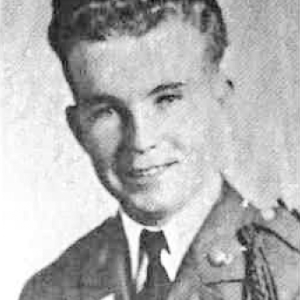 2Lt. Oscar Stanley was born February 19, 1918 in Scott County, Tennessee. Oscar was the son of Rev. S.L. and Etta Stanley and was married to Lena M. (England) Stanley. He entered the U.S. Army on February 27, 1942 and I eft the states with the 18th Infantry Regiment in July of 1942. He recieved a battlefield commission to 2nd Lieutenant in November of 1944. 2nd Lt.
Stanley was with the 18th Infantry Regiment originally during the first invasion of North Africa under the command of Lt. Gen. Lloyd Fredendall, he was later replaced by Gen. George S. Patton in 1943. 2nd Lt. Stanley saw engagements in Northern Africa, Sicily where he was awarded an Oak Leaf Cluster, Tunisia where he was awarded the Silver Star and the European Theatre. He was killed in action by a German sniper on January 25, 1945 in Belgium. Back home in Alabama his wife got the news along with their children, they were grief stricken. He was buried in an American Military Cemetery at Henri-Chapelle. The grave site is located in Belgium, unfortunately, even though his siblings and other family members have wanted to visit the grave they were not able to due to different circumstances. However, at Scott High a picture hangs on the wall beside a German flag. He will always be remembered as a guy who was a family hero. He will never be forgotten. Along with the above mentioned medals he recieved a Combat Infantryman’s badge, the Presidential Unit Citation, the Good Conduct Medal and a Purple Heart.
PFC, Archie D. Lowe,
KIA, Germany
 The official records indicate that Archie D. Lowe was born in Smokey Junction, Tennessee and was inducted in to the Army of the United States 28 April, 1944 at Camp Shelby, Mississippi. He departed the United States 22 October, 1944 for duty in the European area. PFC Lowe was serving with Company F 328th Infantry, distinguishing himself by gallantry in action near Fraulautern, Germany on 18 February 1945 his outstanding courage under fire reflected the highest credit upon him and the Armed Forces of the United States. Died in Saalouis-Roden, Germany. This official statement furnished 27 December, 1971. concerning the death of PFC, Archie D. Lowe. Major General, Vernie L. Bowers, The Adjutant General.
Dana T. York,
KIA Admiralty Islands
 Dana T. York, was born in Cordell, Scott County, Tn 1921 the son of Charlie and Luvernia (Crowley) York. Dana’s mother died soon after his birth and his father died while Dana was less than two years of age. Dorothy, a sister of Luvernia raised Dana from a child. He was born with a birth defect in his hand and at the outset of WWII he was denied entry into the US Army. Afterwards on his second try was admitted and enlisted on October 23, 1942. Pvt.
Dana York was assigned to the 82nd Field Artillery Battalion which was assigned to Gen. Douglas MacArthur’s 1st Cavalry Division. In January 1944, the 82nd Field Artillery Battalion’s first engagement was at Oro Bay, New Guinea and from there moved to Los Negros through the Admiralty Islands. Acting on reports from air reconnaissance Gen. MacArthur decided to move ahead with the assault of the Admiralty Islands. When a force landed on Los Negros on February 29, 1944 there was little resistance but soon it was apparent that it would be far from easy to defeat the Japanese and a furious battle ensued.
The chosen landing site was a small beach on the south shore of Hyane Harbour near the Momote airstrip. The airstrip could be seized quickly; but the surrounding area was mangrove swamp, and the harbour entrance was only about 750 yards. The Japanese had not anticipated a landing at this point and the bulk of their forces were concentrated to defend the beaches of Seeadler Harbour, on the other side of the island. The first wave landed without casualties at 08:17, but once the bombardment lifted the Japanese emerged from their dugouts and machine guns and shore batteries began firing. The morning of March 4, they were ordered to attack across the native skid way. The 2nd Squadron, 5th Cavalry therefore went back into the line to relieve them. While the relief was taking place, the Japanese launched a daylight attack. This was repulsed by the cavalrymen, with the help of artillery and mortar fire, but the American attack was delayed until late afternoon. It then ran into a Japanese minefield and by dawn the advance had only reached as far as the skid way.
The death of Pvt. Dana T. York is not noted from accommodations or citations but it is documented that Pvt. York was killed in action on March 5, 1944 in the battles of Los Negros and the liberation of the Momote Airfield. Seven years after his death Pvt. York was one of 39 unidentified soldiers killed in action in the battle of Los Negros who were shipped back to the U.S. for burial. On April 10, 1951 he and the other 38 soldiers who lost their lives in this battle were buried together in the Jefferson Barracks National Cemetery, St. Louis, Mo.