Rising to the occasion
PROTECTED CONTENT
If you’re a current subscriber, log in below. If you would like to subscribe, please click the subscribe tab above.
Username and Password Help
Please enter your email and we will send you a password reset link.
Rising to the occasion
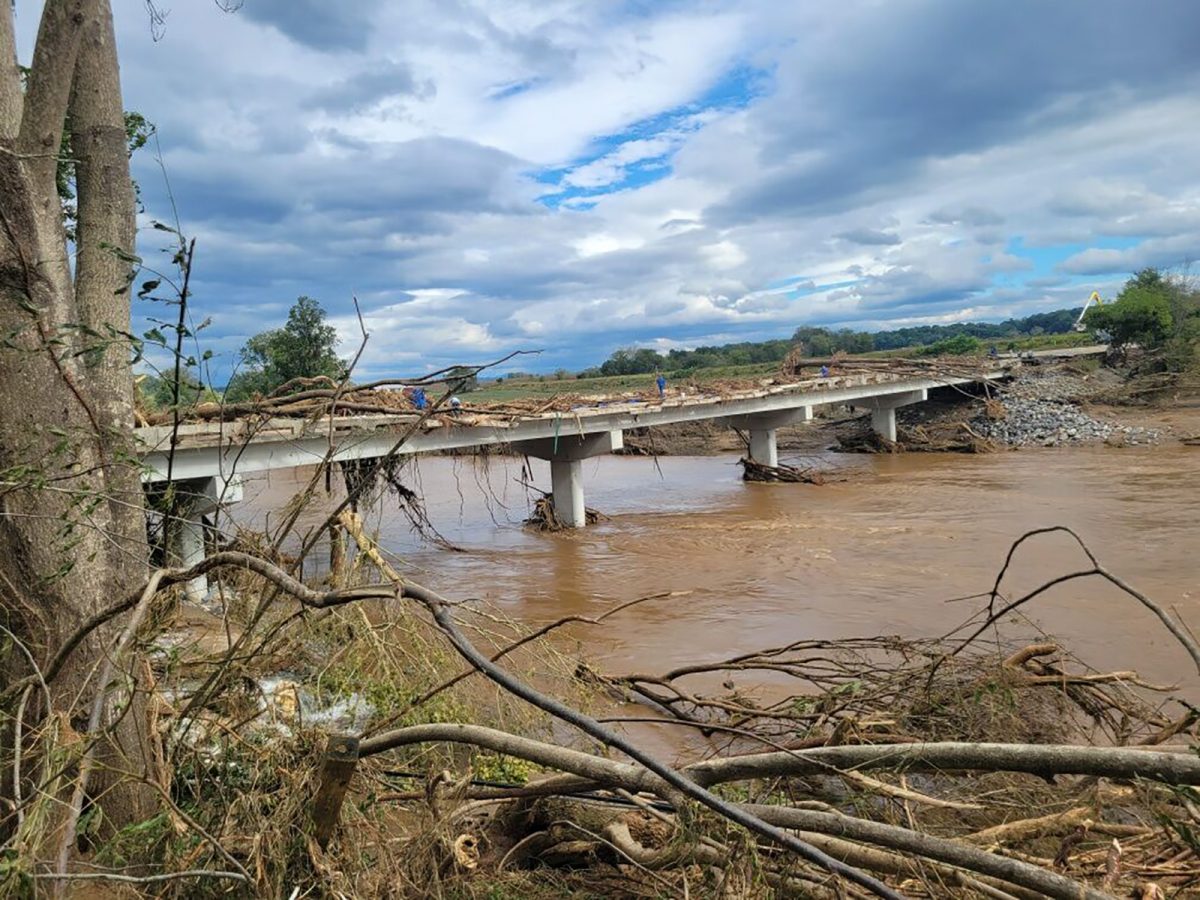
Helene’s historic destruction leaves southeast in shambles
By Shane Gilreath
 The devastation is palpable. Thousands were left to navigate insufferable conditions as Hurricane Helene ravaged its way across the southeast last week, bringing destructive flooding and historic ruin to many communities across Appalachia. When the hurricane reached the mountain range as a tropical storm on September 26th, it created disastrous effects amid an imperfect scenario: the combination of mountains and valleys, small streams and major waterways interacted in historic ways. The runoff from the mountains caused three rivers – the French Broad, Nolichucky, and Pigeon – which run from North Carolina into Tennessee to leave their banks and stretch miles before cresting. While Tennessee is already one of the rainiest states, the Nolichucky River watershed was hit with rainfall “equal to about a 1-in-5,000 years rain event,” said TVA spokesperson Scott Brooks. The catastrophic result of the water swept away property and annihilated local infrastructure, leaving billions of dollars in damage and many inhabitants without even the most basic of necessities.
Though the destruction was broad as the storm made its way up the eastern seaboard, it was Cocke, Greene, Unicoi, and Washington Counties who saw the heaviest damage in East Tennessee. Extensive flooding also occurred in Carter, Hamblen, Hawkins, and Johnson Counties, prompting Governor Bill Lee to declare a state of emergency on September 27th. He subsequently requested monetary aid and assistance from FEMA. His request was approve the next day.
Equally as swift, US Senator Marsha Blackburn joined other lawmakers in urging Congress to pass an emergency relief package. “The devastation from Hurricane Helene across the southeastern United States is simply inconceivable,” they cautioned in a joint statement. “We anticipate even greater tragedy to unfold in the days and weeks ahead as communication and power are restored and we can understand the full scope of this disaster.”
While the generational storm used widespread rainfall to reap near unprecedented havoc, its devastating aftermath equally brought out the very best in mankind. An influx of private volunteers and donors from across America quickly rose to the occasion to aid their fellow Americans, often prompted by social and alternative media platforms. Many of these noble men and women have Scott County ties.
Upon seeing the storm’s aftermath, Alex Bash, a former Johnson City police officer, who currently resides in Knoxville, wanted to help. Utilizing his former law enforcement connections, Bash reached out to Heritage Baptist Church in Johnson City, who quickly put him in contact with people on the ground.
“Most churches are helping,” Bash told Scott County News. While state and national agencies are also on the ground, Bash imparts that churches know the area and they know the people and their immediate needs, sans the oft-long process of state and federal organizations. If Scott County residents are looking to aid Helene victims, operating through local church is the route Bash most recommends.
“Churches are nimble and fast,” he said, and have been able to help people in immediate and productive ways, which may, he admits, be something as simple as removing large downed trees for those stranded, enabling them to pass through drive- and roadways, while other times, helping families gut their homes before excessive water damage exacerbates an already bad situation.
Because of the way churches work, “every day, we can pick a house and help another family,” Bash says of his volunteerism.
Despite the efforts of many, more volunteers are needed in a multitude of arenas. The Tennessee Emergency Management Agency (TEMA), who works hand-in-hand with the Tennessee Voluntary Organizations in Disaster (TNVOAD) cautions, however, against self-deploying to the region, siting the many safety hazards that could create more harm than good.
Blackburn also asked for caution. “I encourage every Tennessean to avoid dangerous areas and heed the direction of emergency personnel,” the senator said. Those interested in volunteering officially, can also sign up at voltnhq.galaxydigital.com.
Like Bash, many in Scott County have already sought ways to help. Cordell Transportation have dispatched their trucks to the emergency zone, carrying donations from Winfield churches and organizations. Many workers with Holston Electric Cooperative and others have also deployed to the area. Other organizations are collecting goods to also be sent.
Bash says that while donations of shampoo and toothbrushes and everyday items are useful and appreciated, those directly impacted by the storm also need basic items like firewood for warmth and meals ready to eat. Because of that, he suggests financial donations to area churches and organizations already on the ground might prove more useful. Monetary support allows individuals and families to receive immediate help, on a case by case basis, when specific and respective needs inevitably arise. Heritage Baptist Church in Johnson City, according to Bash, with whom he has worked, would be a trusted and useful place to start (www.hbcjc.org).
Hurricane Helene has left more than 200 dead and many more unaccounted for with that number expected to rise. As a result, the storm is cited as the deadliest hurricane to hit the United States since Katrina in 2005.
Scott County News would like to thank all the volunteers, business and organizations that donated to the survivors of Helene. Our thoughts and prayer go out to all the families. We tried to include as many photo’s as possible. If you would like to send us your photo and information we would be happy to include it in upcoming issues.