‘Silence Isn’t Golden’ Sheds Light on Elder Abuse
PROTECTED CONTENT
If you’re a current subscriber, log in below. If you would like to subscribe, please click the subscribe tab above.
Username and Password Help
Please enter your email and we will send you a password reset link.
‘Silence Isn’t Golden’ Sheds Light on Elder Abuse
By Shane Gilreath
SCN Contributing Editor
[email protected]
According to remarks from Executive Director Christy Harness at last week’s County Commission meeting, the Scott County Family Justice Center (SCFJC) is launching a new awareness campaign aimed at protecting some of the county’s most vulnerable residents. Through the program, SCFJC hopes to see more and more Scott County residents speak up when they suspect, witness, or experience abuse.
“We have started a program called ‘Silence Isn’t Golden,’” Harness told SCN of the program she promoted in Huntsville on Monday when she presented the initiative.
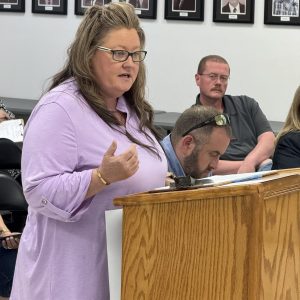 “At a conference in May, a gentleman, Paul Greenwood, talked about a campaign from years ago,” Harness later told SCN. It was from that conversation that the local “Silence Isn’t Golden” campaign came to be.
For its part, SCFJC elected to heavily promote the program during the month of June to correlate with the nationally recognized Elder Abuse Awareness Month. To help spread the message, local businesses are being encouraged to display campaign materials throughout the community showing signs to look for and to raise overall awareness of an often underrepresented generation.
“We have four different campaign posters,” Harness said, adding that businesses can help advocate against elder abuse simply by displaying the posters where customers and employees will see them. The need for awareness is significant, even in Scott County, where such things are often seen as foreign. Since July 2018, SCFJC has served an average of 10 elderly individuals each year, ranging in age from 60 to 90, who have experienced some form of elder abuse. In a conversation with SCN, Harness noted that experts estimate elder abuse is vastly underreported.
“Some reports state that for every case of elder abuse that is reported, 23 go unreported,” Harness told SCN, an alarming figure for a population that’s often at their most vulnerable.
To confront the issue, SCFJC formed the Elder/Vulnerable Adult Coordinated Community Response Team in March 2023. The team brings together agencies that work with or provide services to elderly and vulnerable adults. In addition, the Vulnerable Adult Protective Investigation Team (VAPIT), a collaborative team across other agencies appointed by the District Attorney General, meets quarterly to coordinate investigations involving suspected abuse, neglect, or exploitation.
The scope of the problem became clear during VAPIT’s May 2026 review. The team examined 30 cases involving 43 separate allegations, including two cases of physical abuse, 10 cases of emotional abuse, 13 cases of financial exploitation, and 18 cases of neglect.
Notably, elder abuse can take many forms, Harness says. Physical abuse may involve hitting, pushing, or improper restraint. Emotional abuse can include intimidation, threats, humiliation, or isolation. Neglect may occur when a caregiver fails to provide necessary food, medication, hygiene, or medical care. It is financial exploitation, however, that is seen as the fastest-growing. Warning signs may include unusual withdrawals from bank accounts, sudden changes to wills or financial documents, changed deeds and land ownership, unpaid bills despite adequate resources, new “friends,” caregivers, or even family exerting undue influence. In fact, persuading, pressuring, manipulating, or deceiving an elderly person into signing over land, homes, mineral rights, bank accounts, or other valuable assets is one of the more common forms of elder abuse commonly investigated by adult protective service agencies, attorneys, and law enforcement.
Elderly individuals purchasing large quantities of gift cards or making wire transfers under pressure has also become common with a growing online presence. According to AARP, scammers increasingly target older adults through romance scams, fake investment opportunities, government impersonation schemes, tech-support scams, and so-called recovery scams, in which criminals promise to recover money lost to a previous fraud for an upfront fee. Fraud experts warn that artificial intelligence is making many scams more convincing and harder for the elderly population to detect.
Harness tells SCN that she hopes the campaign’s message is simple – if something seems wrong, speak up. By raising awareness among families, businesses, churches, and neighbors, SCFJC believes the community can help ensure that silence is no longer the ally of abuse and that Scott County voices can be a generation’s strongest advocate.