Rail Trail Advocate Seeks Opponents for Listening Session
PROTECTED CONTENT
If you’re a current subscriber, log in below. If you would like to subscribe, please click the subscribe tab above.
Username and Password Help
Please enter your email and we will send you a password reset link.
Rail Trail Advocate Seeks Opponents for Listening Session
By Shane Gilreath
SCN Contributing Editor
[email protected]
As the debate continues to swirl over the proposed Rail Trail project in Scott County, one of the project’s leading advocates is inviting residents who oppose the proposal – or remain undecided on their support – to take part in a series of small listening sessions later this month.
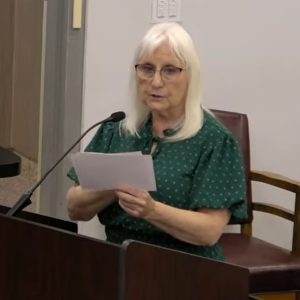
Nancy Manning, Executive Director of Tennessee Citizens for Wilderness Planning (TCWP), said the meetings are not intended to persuade residents to support the project. Instead, Manning hopes to be an ear for Scott County residents who feel their concerns over the project have not been adequately addressed.
“I am actually looking for folks opposed or undecided more than folks that are in favor,” Manning told SCN. “These meetings are not intended to be presentations about the trail or attempts to convince people to support it. My purpose is to listen, especially to people who have concerns about the project or who feel they haven’t been heard.”
The TCWP Director said she has already sent some 600 emails to Scott County residents inviting them to participate but has only received a limited response.
“One of the things I’m trying to better understand is exactly why some people in Scott County feel frustrated, skeptical, or opposed to the project,” she said.
The meetings will be held in Huntsville on June 13, 2026, from 1:30 PM to 4:30 PM, and on June 20, 2026, from 10 AM to 12:30 PM and again from 1:30 PM to 4:30 PM. Because seating is expected to be limited, residents who want to have their voices heard are being asked to register in advance. Interested participants can email an RSVP to [email protected] and indicate their first, second, and third preferred meeting times. Meeting locations will be provided after registration. Participation, at this time, is limited to residents of Scott and Campbell Counties.
Manning is no stranger to Rail Trail and points to a similar effort in neighboring Anderson County, where she spent eight months meeting with residents who opposed the trail proposal. During that process, she organized field trips to other rail trails and worked with community members to address their concerns – just as she hopes to do in Scott. The effort ultimately resulted in a unanimous resolution of support from the Anderson County Commission in May.
The proposed Rail Trail project would convert the abandoned 42-mile rail corridor between Oneida and Devonia into a recreational trail for walking, cycling, and outdoor recreation. While Anderson County officials have endorsed the project, opposition remains strong in Scott County.
Scott County Commissioners voted against supporting the proposal in its early stages and also voted not to meet with representatives from the Trust for Public Land (TPL). County Mayor Jerried Jeffers has criticized the project, telling SCN in January 2025 that the corridor was private land. At the time, Huntsville Mayor Dennis Jeffers urged county officials to stand with local residents. Oneida Mayor Lori Phillips-Jones has expressed support for the trail as part of her administration’s ongoing efforts to expand tourism opportunities in Scott County.
Supporters of the project can now point to a recent development involving the rail corridor itself. “On April 27th, the 42 -mile rail corridor was successfully rail banked under federal law,” Manning told the Anderson County Commission. “Railbanking preserves the corridor, intact.”
Railbanking is a federal process that preserves former railroad corridors for potential future rail service while permitting interim recreational use. Rail enthusiasts argue that railbanking ensures the corridor remains intact rather than being divided or sold off, preserving transportation options for future generations while creating opportunities for recreation and tourism today.
For Manning, however, the immediate goal is simply to hear from residents who remain unconvinced. “Those are conversations that need to happen,” she said, “and they can only happen if people are willing to come and speak honestly.”