
History
PROTECTED CONTENT
If you’re a current subscriber, log in below. If you would like to subscribe, please click the subscribe tab above.
Username and Password Help
Please enter your email and we will send you a password reset link.
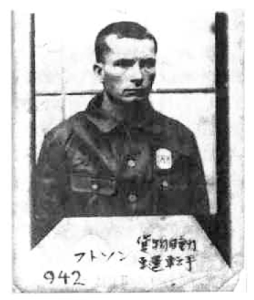
Sgt. Joe Henry Hutson Bataan Death March Survivor:
Continued from August 29, 24 issue of The Scott County News.
During the march, one of his “best buddies” was dying, just barely able to wobble along. He leaned against Hutson; put his arm around his shoulder for support. Without thinking, Hutson, virtually in the same shape, pushed the arm aside. The soldier fell to the ground. Almost as soon as he had hit the earth, a Japanese soldier put a bullet through him. The march went on. Hutson remembers that incident all too vividly and scores of others like it. He marched on despite severe wounds to his legs caused by machine gun fire and shrapnel from a hand grenade. But although the march itself was an almost unbearable task, life in a Japanese prisoner of war camp was a living hell. All who were able worked a daily grind, subsisting on a handful of rice or, once a month or so, a cup of watery soup made from potato vines. The sleeping berths in a POW barracks were nothing more than wooden slats an inch or so apart. Hutson said death got almost routine. And despite the illnesses, the lack of good food and water, most of those who died were those who simply gave up, he said. There were those, for example, who couldn’t stomach food that a big green fly had lit upon, Hutson said. They’d push it aside. He would eat it. It wasn’t anything, Hutson said, to wake up in the morning lying between two dead soldiers. On one occasion, he said, he opened up his little mess kit and placed it on the body next to him and ate his rice. Death is something you never get use to, but in some instances, can learn to live with. Hutson himself almost died of dysentery. “Everybody had it,” he said. He heard his name called out once, but they took somebody else away to be buried – in the four-man graves that were so commonplace near the POW camp. On another occasion, he and several other soldiers were carried outside the barracks and laid on the ground, awaiting a burial squad. “It didn’t matter if you were dead … you could be almost dead; it didn’t matter to them. They’d put you in the ground while you were still breathing, or hit you in the head with a shovel,” Hutson said. Lying there outside the barracks with the dead and near dead, Hutson found enough strength to roll over. He rolled under the barracks and out of sight as the bodies were being removed. He remembers thinking he was determined to go home when this was all over. Later, he made his way undetected back into the barracks where he ate everything he could get his hands on, regained his strength and continued to do as he was told. He was no longer a soldier. He was a survivor. The uniform he had worn rotted off. The uniform of the day in the prison camp became a “G” string, Hutson said. The toilet facilities consisted of a big square hole in the middle of the compound. But all of the soldiers, the survivors, tried hard to maintain their personal hygiene. They cut their hair (“although I don’t remember how”) and they shaved regularly with a mess kit knife.
They didn’t want to give the Japanese any hair to grab hold of, Hutson said. If you were caught stealing – food, water, anything – the penalty was death. If you escaped, your head was brought back on the end of a bayonet as an example to the other prisoners. If you were caught trying to smuggle any kind of food back into camp after a work detail,
you died. Those were the facts of life in the prison camp in The Philippine Islands where Joe Hutson just happened to meet and get acquainted with a man from his neck of the wood, Bill York, now postmaster at Huntsville. Both men, Hutson said, stole food to stay alive, smuggled bits of food into camp, but were never caught. He knows he did and assumes that Bill York made it back alive for the same reasons. At some point during his captivity (Hutson didn’t know until after the war just how long he was a prisoner) he and several others were led off to a waiting “cattle ship,” where they were put aboard.
They were packed in the bowels of the ship like sardines. Many died, and their bodies were removed so that eventually there was enough room for some of the men to lie down. He didn’t know at the time, but he was being moved from The Philippines to Honshu, the main island of Japan. There, in a barracks similar to the one he’d left in The Philippines, in a POW camp not unlike the previous one, Hutson spent the remainder of the war. In many ways, however, the prison camp in Japan was better. For one thing, Hutson was assigned to work with a civilian, described as an old Japanese man whose-occupation was a welder. Just about every day, Hutson would accompany the old man to the shipyards to make repairs to crippled Japanese ships. He was the welder’s helper, handing him tools and other things when called upon to do so. “The old man was good to me,” Hutson said, pointing out that since they worked by themselves in many cases, the old man would share his food with him and sometimes give him food to sneak back into the prison compound at the end of the work day. “If he had been caught, he would have been ki lled. They weren’t even allowed to talk to the prisoners,” Hutson said. As a prisoner in Japan, the clothing was better, too. Hutson said he was issued a pair of woolen pants and a pair of “tennis shoes,” which “were made with a place for your big toe to fit in and a place for the rest of your toes.” Toward the end of the war, not long before he saw “the big flash” in the sky that he later learned or imagined to have been the atomic bomb, several young Japanese youths befriended Hutson. The boys managed to communicate with him, repeating stories they had picked up from the Japanese soldiers, information which led Hutson and the other POWs to believe that the war was nearing an end and that Japan would soon fall. “One day one of the guards came into the barracks and said, ‘No work today; too much sickness.’ We knew then that the war was about to end,” Hutson said. Three or four days later, the same Japanese guard informed the POWs: ‘”America better than Japan; war is over.”’ And so it was. The cruel guards fled the compound; the ones who had been good to the prisoners remained behind. In a few days American planes flew over the camp and parachuted several 55- gallon drums out. They were filled with all sorts of food – canned hams, fruits … the stuff that Hutson and the other prisoners had only dreamed about. He says he got his share of the food. So, too, did the guards and civilians around the area. There was enough for everybody. Hutson said that some of the prisoners who had survived the tortures of prison camp life month after grueling month died before their release. He feels that they simply ate too much food; died from overeating after months of near starvation. When he was released, one of the first things Hutson did was go home with the old Japanese fellow he had worked with. “They’re people just like we are; some good, some bad. This old man was a good man,” Hutson said. Many was the time, Hutson said, that the old man had slipped him a couple of handfuls of parched beans – some of the best food he had while a POW. When he was finally rescued, Joe Hutson weighed 85 pounds. He had survived a bout with dysentery, and another common ailment, malaria. The wounds in his legs have never healed. “Just a few days ago, Dr. (H.M.) Leeds took out a piece of shrapnel just above my left knee,” Hutson said. But above all, he had survived. ‘’I’m not bragging. I ain’t some kind of hero. There weren’t any heroes over there where I was. You were either alive or dead, that’s all. I did steal to eat; everybody did. A fellow would go crazy to get a handful of sugar. They hid it – the food they stole – in a cut-out bottom of their canteen, in their socks, even tied to the inside of their pant legs.” He didn’t even go to a hospital when he got back to the States. “I guess I told them I just wanted to go home. Oh, they checked me over real good, I guess, but finally they let me go. They gave me $300 and some travel pay and I got to go home. I knew I would,” said Hutson. “Somehow, I knew all along I was going to get to go back home.” On October 16, 1950, Hutson got a letter from Frank W. Barton, director of the Claims Service Division of the War Claims Commission in Washington. That was the first time he knew how long he was a prisoner of war, because they gave him back pay based on 1,254 days of captivity. They gave him a dollar a day. For a while after the war, Hutson was classified as 100 percent disabled and he drew a big fat government check because of his disability. Then it was dropped drastically. Then it was raised a little. Then it went down again. Finally, by 1968, it leveled out and remained at 60 percent. He got “a bunch of medals,” too. But he can’t tell you what any of them are except the Purple Heart. “You could call Roy Denver Sexton (a local attorney and a retired Army officer) and he could probably tell you. I really don’t know what they are,” he said. “All of them came after the war.” There were a lot of World War II soldiers who came back heroes; thousands who came back with horrifying memories and a few campaign ribbons. But there aren’t many like 67-year-old Joe Hutson. He came home a survivor in every sense of the word.