Winfield looks to tackle public nuisances
PROTECTED CONTENT
If you’re a current subscriber, log in below. If you would like to subscribe, please click the subscribe tab above.
Username and Password Help
Please enter your email and we will send you a password reset link.
Winfield looks to tackle public nuisances
By Shane Gilreath
[email protected]

Photo by Shane Gilreath
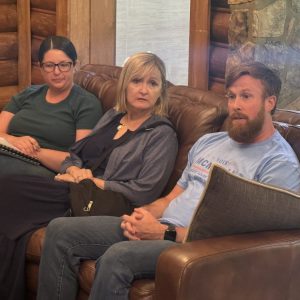
Cumberland Clear’s Jennifer Shockley addressed the Winfield Mayor and Aldermen, reminding attendees of the TDEC meeting that it scheduled for November 4th at 5pm at Oneida High School
With a transfer station and a North Oneida landfill proposal knocking at their door, the Town of Winfield went back to the drawing board last Monday, re-examining the town’s ordinances and proposing changes that could impact waste management and other public nuisances, including 4th of July fireworks, Town Attorney Jade Peters said in response to a question from the public. The new ordinance, which saw its first reading on October 13, 2025, dominated most of the relatively short municipal meeting, where a few dozen people gathered at the Winfield Municipal Building.
Winfield Mayor Jerry Dodson opened the meeting by informing the public that they would have their moment to address the Mayor and Aldermen, granting citizens five minutes at the podium. While the board meandered through items that included road paving, surplus equipment sales, and community input on recycling and concerns over zoning and the Scott-McCreary Environmental Coalition, the ordinance’s first reading eventually made its way to the forefront. Upon inspection, that ordinance allows Winfield to “protect the public health, safety, and welfare of its residents,” and defines a public nuisance as any act, omission, condition, or use of property which endangers the health, safety, peace, or comfort of the public; obstructs of interferes with the use of public streets, sidewalks, or right-of-ways; pollutes or contaminates air, soil, or water; attacks insects, rodents, vermin, or creates offensive odors; creates excessive noise, dust, smoke, vibration, glare, or other disturbances affecting neighboring properties; accumulates trash, junk, debris, or waste material visible from a public place; allows unsafe, unsecured, or dilapidated structures to remain in conditions posing public threats; encourages illegal dumping or discharge of water onto public or private property; and/or violates any ordinance or statute declared to be a nuisance under Tennessee law.
As previously reported, Tennessee gives cities and counties broad authority to define nuisances by ordinance and to use criminal fines, civil injunctions, administrative abatement, receivership, liens and even seizure/forfeiture in order to stop and clean up public nuisances – a precedence that Winfield has followed.