
Scott County the Beginning
PROTECTED CONTENT
If you’re a current subscriber, log in below. If you would like to subscribe, please click the subscribe tab above.
Username and Password Help
Please enter your email and we will send you a password reset link.
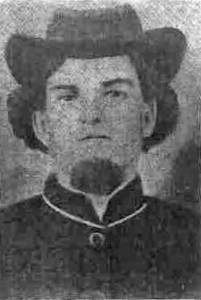
1st Sgt. Fred D. Sexton; Distinguished Service Cross, WWI
Fred D. Sexton was born in Paint Rock January 13, 1899 was the son of William Charley and Eldora (Jones) Sexton, was fourth of nine siblings there names were;
Lemona, Reuben, Gilbert, James F., Schofield, Uzziel, Dock and Rona.
Citation reads; “The President of the United States of America as authorized by an Act of Congress, takes pride in presenting the Distinguished Service Cross, posthumously to Sgt. Fred D. Sexton ASN 54830, United States Army, for extraordinary heroism in action while serving with Company L, 26th Infantry Regiment, 1st Division, AEF. South of Sissons, France 18 July, 1918. Sergeant Sexton exposed himself to heavy machine gun fire while leading his platoon in an attack on a machine gun position near Missy-au-Bois. Although wounded in the leg by a machine gun bullet, he refused to leave the field of battle. He continued to command his platoon until being mortally wounded the following day.”
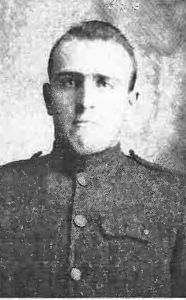
Cpl. Fletcher
Newport family
Fletcher S. Newport was born in Scott County October 23, 1895 and was the son of Ezekiel and Tennessee (Jeffers) Newport. He enlisted in a Cavalry unit in the US Army in 1914. Fletcher was stationed in Greenville, South Carolina before being sent to Europe during WWI. According to his mother, Tennessee (Jeffers) Newport he was out of the US when he sent home a letter, in the letter it stated;
“Dear Momma, I am now on active service with the American Expeditionary Force today, January 27, 1919, there is snow. The states have more snow then where I was and that I have ever seen. Please tell Delphia that I love her so very much and that I will be home to hold our dear son Clifton soon.”
Sincerely; Cpl. Fletcher Newport.
Fletcher’s grandfather, Fielding Newport who served in Co H 9th Tenn. Cavalry during the Civil War. Fielding was wounded three times and at least once while foraging for food for his unit. Cpl. Fielding Newport died in 1880.
Shane Martin,
Desert Storm
Grandson of Fletcher Newport, Shane Martin is the son of Kenneth and Zondria (Newport) Martin. Enlisted in 1990, worked on tanks and trucks that were sent to the troops of Desert Storm. Was in an Airborne unit, was stationed in Korea. Shane also had a grandfather, Leslie Martin who served with the 101 st Airborne in France during WWII.
Submitted by; Makalynn Martin, 8th grade Fairview Elementary School.
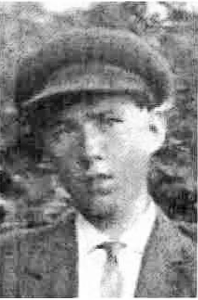
Hugh T. Lewallen KIA in France, WWI
Hugh Taylor Lewallen was born September 3, 1895 and was the son of John H. and Lydia (Landrum) Lewallen, his siblings were; Archie Leroy (NWI veteran), George Henderson, Nellie Mae, Raymond Eli, Millie Louvana, Ernie Reva, Mary Etta and Virginia Kathleen.
Hugh recieved his draft notice June 5, 1917 he entered service October 2, 1917 and was originally assigned to Co. H. 327th Infantry. On October 14, 1917 was transferred to Co. L. 117th Infantry Regiment which was designated to the US Army’s 30th Division. The 30th Division (The Old Hickory Division named after President Andrew Jackson of Tennessee) was reorganized in accordance with the tables of organization of August 8, 1917. The 30th Division underwent a term of systematic training from September 17 until April 30, 1917. During October 1917, selective service men from Camps Gordon, Jackson and Pike completed the regiment and filled out the rest of the division.
On May 11, 1918 Pvt. Lewallen was sent to Europe to join the 117th Infantry Regiment as part of the 59th Brigade, 30th Infantry Division and received his first taste of war on July 9, 1918. With the 27th (US) Division, it was assigned to the organization and defense of the East Poperinghe Line, a third defensive position in the Dickebusch Lake and Scherpenberg Sectors. The 30th Division on July 11, 1918 assumed full responsibility for the East Poperinghe trench system. The 117th Infantry Regiment as part of the 30th Division reached the front lines for training on July 16, 1918 and remained until August 18. Actual training was carried until August 9. The 117th Infantry Regiment and the rest of the 59th Infantry Brigade remained the British 3rd (GB)
Division. After a brief return to the rear for further training, the 30th Division relieved the 3rd (GB) Division in the front line of the Canal Sector from the vicinity of Elzenwalle to the railroad southeast of Transport Fme on the nights of August 16 and 17, 1918. On August 18, 1918 the 30th Division (US) assumed command, with the 6th (GB) Division to its right. On the next day the Canal Sector occupation was merged into the Ypres-Lys Operation. From August 19 until September 4 the 30 (US) Division took part in the YpresLys Operation. The 30th (US) Division, less artillery, and the 105th Ammunition Train participated in the Somme Offensive Operation September 22 -October 1. On the nights of September 21-24, 1918, the 30th (US) Division moved to the Tincourt-Boucly east of Villeret and Hargicourt. On September 26 and 27 the 30th (US) Division attacked from a line of departure between 300 and 400 meters east of the line between La Haute Bruyere and Malakoff Fme On the night of September 27 and 28, the 60th Infantry Brigade relieved the 59th Infantry Brigade and the 117th Infantry Regiment.